
Kriti's ART Gallery: Madhubani Art and the Stories It Carries
Madhubani, also known as Mithila art, is more than a decorative tradition—it is a visual language shaped by centuries of ritual, memory, and regional identity. Rooted in Bihar and passed down through generations, it transforms everyday walls, paper, and fabric into vivid expressions of folklore, devotion, and celebration.
In this introduction, we explore why Madhubani art continues to resonate so deeply: the intricate linework, the symbolic motifs, and the unmistakable sense of place embedded in every composition. For anyone curious about Indian folk traditions, it offers a powerful reminder that art can be both beautiful and deeply meaningful.
Why Madhubani Matters
Madhubani art, also known as Mithila art, is a traditional painting practice from the Mithila region of Bihar, India. Rooted in centuries of cultural expression, it has been passed down through generations as a living art form connected to festivals, rituals, and community identity.
Its visual language is distinctive: bold outlines, vivid natural pigments, intricate patterning, and motifs drawn from mythology, nature, animals, and daily life. Whether rendered in the dense detail of Kachni or the vibrant fills of Bharni, each style reflects both artistic skill and the symbolism embedded in the tradition.
Beyond its beauty, Madhubani art carries cultural memory. It preserves stories, beliefs, and values that have long shaped local life, making it more than decoration—it is a record of heritage. In a contemporary setting, it offers a powerful connection between traditional Indian craftsmanship and enduring visual expression.
Add Your Heading Text Here

Add Your Heading Text Here
Lorem ipsum dolor sit amet, consectetur adipiscing elit. Ut elit tellus, luctus nec ullamcorper mattis, pulvinar dapibus leo.
Add Your Heading Text Here
Lorem ipsum dolor sit amet, consectetur adipiscing elit. Ut elit tellus, luctus nec ullamcorper mattis, pulvinar dapibus leo.
Add Your Heading Text Here
Lorem ipsum dolor sit amet, consectetur adipiscing elit. Ut elit tellus, luctus nec ullamcorper mattis, pulvinar dapibus leo.
Add Your Heading Text Here
Lorem ipsum dolor sit amet, consectetur adipiscing elit. Ut elit tellus, luctus nec ullamcorper mattis, pulvinar dapibus leo.
Add Your Heading Text Here
Lorem ipsum dolor sit amet, consectetur adipiscing elit. Ut elit tellus, luctus nec ullamcorper mattis, pulvinar dapibus leo.
Across Madhubani painting, a few shared principles appear again and again: tightly organized compositions, no empty spaces, and borders that hold the image together. Common motifs include gods such as Krishna and Shiva, animals like fish and peacocks, flowers such as the lotus, and scenes from daily life—all used to layer storytelling, symbolism, and rhythm into the artwork.
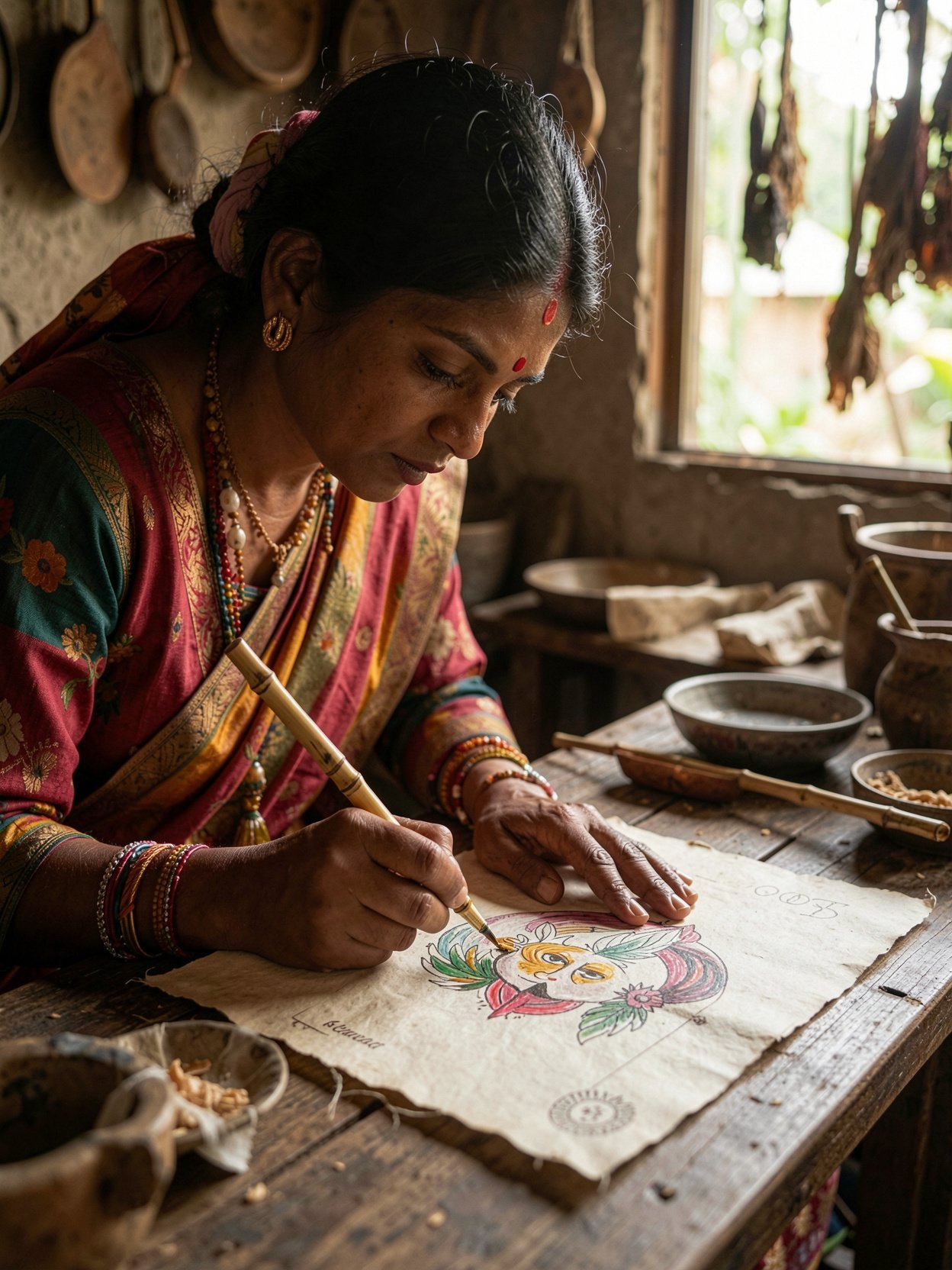
From Village Craft to Living Tradition: The Origins of Madhubani Art
Madhubani art originates in the Mithila region of Bihar and neighboring areas, where it developed as a deeply rooted form of domestic and ritual expression. For generations, women painted the walls and floors of homes with symbolic images during festivals, weddings, births, and other life-cycle events, turning everyday spaces into visual records of belief, celebration, and memory.
The tradition reflects a shared cultural language rather than a single fixed style. Artists draw on local stories, deities, animals, plants, and auspicious symbols, using dense patterning, strong outlines, and bright natural colors to fill every part of the composition. The result is not merely decorative: it is narrative, ceremonial, and closely tied to the rhythms of Mithila life.
What makes Madhubani especially significant is that it remains a living art form. It has moved from mud walls to handmade paper, cloth, and other surfaces, but it continues to carry the knowledge, techniques, and values of the communities that sustain it. Today, individual artists preserve inherited methods while also adapting the tradition for new audiences, ensuring that Madhubani remains both historically grounded and culturally active.